Sulfate Spring (Healing & Recovery) — Chemistry, Skin Feel, Rinsing Rules & Top Baths
QUICK CHEMISTRY SUMMARY
Sulfate springs ('Ryusanen') pair sulfate ions with sodium ('Bosho-sen'), calcium ('Sekko-sen'), or magnesium ('Seikumi-sen'). Revered for centuries in Japanese mountain 'toji' recuperation towns like Ikaho and Kurokawa, they leave skin supple and hydrated—do NOT rinse off afterward.
- Water Appearance
- Clear to soft golden-straw tint
- Post-Soak Rinse Verdict
- Do NOT rinse (leave mineral veil)
- Official MOE Definition Threshold
- Dissolved minerals ≥ 1,000 mg/kg with sulfate ions (SO₄²⁻) dominant
IMPORTANT BATHING PRECAUTION
How Sulfate Spring (Healing & Recovery) Works on Skin & Circulation
Calcium-sulfate ('gypsum') waters deliver a velvety, hydrating finish, while sodium-sulfate waters support brisk circulation after mountain hikes.
Even in central Shinjuku, Thermae-Yu trucks genuine Naka-Izu sodium-calcium sulfate spring water daily to its open-air bath.
Traditional Balneotherapy Uses: Muscle stiffness, dry skin hydration, circulation & mountain-hike recovery
Step-by-Step Soaking & Post-Bath Rinse Protocol
- Soak 10–15 minutes at 40–41°C after long walking or hiking days
- Skip the post-bath tap shower so hydrating sulfate minerals stay on your skin
- Split into two shorter soaks with a cool rest on outdoor stone benches
Want to compare all 10 official classifications side by side? Explore our interactive 10 Mineral Spring Chemistries Atlas.
Verified Bathhouses Featuring Sulfate Spring (Healing & Recovery) (13 Venues)
| Facility | Location | Hand-Free Total | Tattoo Policy |
|---|---|---|---|
| Thermae-Yu Shinjuku Natural Onsen | Shinjuku-ku, Tokyo | ¥2,700 weekday / ¥3,000 weekend all-inclusive (late-night surcharge after midnight) | No Tattoos |
| Fuji Chobo-no-Yu Yurari (Mt. Fuji View Onsen) | Narusawa (Lake Kawaguchiko Area), Yamanashi | ¥1,600 weekday / ¥1,900 weekend including towels (6 Fuji-view private baths available for extra fee) | No Tattoos |
| Sainokawara Open-Air Bath (Kusatsu Onsen) | Kusatsu-machi, Gunma | ¥800 entry (¥1,150 w/ souvenir towel; covered by Kusatsu's ¥2,100 'San-Yu-Meguri' 3-Bath Pass) | Tattoo-Friendly |
| Otakinoyu (Kusatsu Traditional Awaseyu Bathhouse) | Kusatsu-machi, Gunma | ¥1,100 entry (~¥1,450 w/ towel; eligible for ¥2,100 Kusatsu 3-Bath Pass) | Tattoo-Friendly |
| Ikaho Onsen Ishidan-no-Yu | Shibukawa (Ikaho), Gunma | ¥410 municipal entry (~¥710 with towel) | Tattoo-Friendly |
| Kurokawa Onsen Yamamizuki (Riverside Forest Rotenburo) | Minamioguni (Kurokawa Onsen), Kumamoto | ¥1,500 Kurokawa 3-Bath Cedar Token (= ¥500/bath across 3 ryokan) + ~¥250 towel | Tattoo-Friendly |
| Dai-ichi Takimotokan (Noboribetsu Hell Valley Baths) | Noboribetsu, Hokkaido | ¥2,250 all-inclusive (or ¥1,700 from 16:00–18:00) with towels provided | No Tattoos |
| Shiroganeyu Public Bath (Ginzan Onsen) | Obanazawa (Ginzan Onsen), Yamagata | ¥500 municipal entry | Tattoo-Friendly |
| Okunikko Yumoto Onsen (Nikko National Park Sulfur Springs) | Nikko (Okunikko Yumoto), Tochigi | ¥1,000–¥1,500 day entry (+¥250 towel) | Tattoo-Friendly |
| Gozanoyu (Kusatsu Yubatake Dual-Source Bathhouse) | Kusatsu-machi, Gunma | ¥800 entry (covered by ¥2,100 Kusatsu 3-Bath Pass) | Tattoo-Friendly |
| Kurokawa Onsen Shinmeikan (Hand-Carved Cave Bath) | Minamioguni (Kurokawa Center), Kumamoto | ¥500 effective via Yu-Tegata pass (+~¥250 towel) | Tattoo-Friendly |
| Zao Onsen Dai-Rotenburo (Stream-Carved Acidic Gorge Bath) | Yamagata (Zao Onsen), Yamagata | ¥800 entry (~¥1,100 w/ towel) | Tattoo-Friendly |
| Sukayu Onsen (Aomori Historic 1,000-Person Cypress Bath) | Aomori (Mt. Hakkoda), Aomori | ¥1,000 all-in including towels (optional ¥1,300 'yuami-gi' modesty robe available) | Tattoo-Friendly |

Thermae-Yu Shinjuku Natural Onsen
Shinjuku's flagship 24-hour urban spa featuring open-air natural hot spring water trucked daily from Izu, plush recliners, and full towel/robe service.
Hand-Free Est: ¥2,700 weekday / ¥3,000 weekend all-inclusive (late-night surcharge after midnight)
Spring: Sodium-calcium sulfate thermal water transported daily from Naka-Izu 'Jindai-no-Yu'
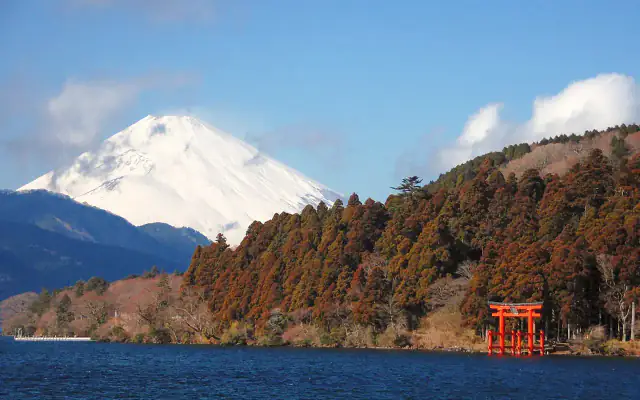
Fuji Chobo-no-Yu Yurari (Mt. Fuji View Onsen)
Delivers one of Japan's most dramatic head-on views of Mount Fuji directly from tiered stone rotenburo baths, with towels included in the ¥1,600–¥1,900 ticket.
Hand-Free Est: ¥1,600 weekday / ¥1,900 weekend including towels (6 Fuji-view private baths available for extra fee)
Spring: Weakly alkaline calcium-magnesium-sodium sulfate-chloride natural spring
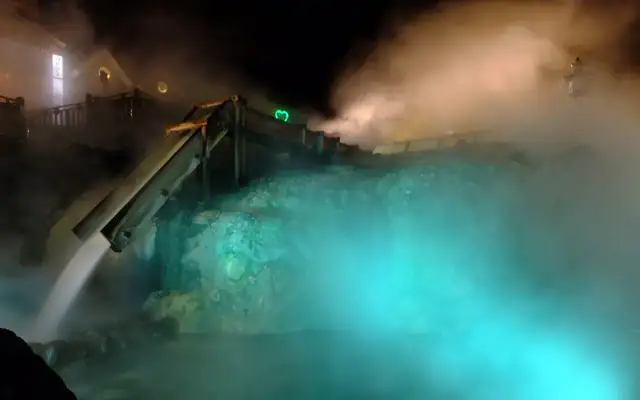
Sainokawara Open-Air Bath (Kusatsu Onsen)
One of Japan's grandest outdoor hot spring pools (500 m²), cradled by alpine forest and steaming volcanic creeks in Kusatsu with full tattoo access.
Hand-Free Est: ¥800 entry (¥1,150 w/ souvenir towel; covered by Kusatsu's ¥2,100 'San-Yu-Meguri' 3-Bath Pass)
Spring: Strong acidic chloride-sulfate spring (Bandaiko source, pH ~1.6)
Otakinoyu (Kusatsu Traditional Awaseyu Bathhouse)
Kusatsu's most complete day-use bathhouse, preserving the centuries-old 'Awaseyu' progressive temperature bathing ritual using pure Nikawa spring water.
Hand-Free Est: ¥1,100 entry (~¥1,450 w/ towel; eligible for ¥2,100 Kusatsu 3-Bath Pass)
Spring: Rare Nikawa acidic sulfur-aluminum-sulfate-chloride spring
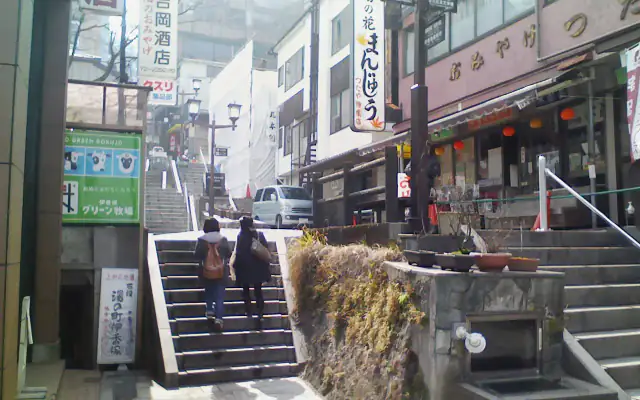
Ikaho Onsen Ishidan-no-Yu
Tucked directly beside Ikaho's historic 365 stone steps, offering authentic amber-brown 'Golden Spring' mineral water for just ¥410.
Hand-Free Est: ¥410 municipal entry (~¥710 with towel)
Spring: Calcium-sodium sulfate-bicarbonate-chloride 'Golden Spring' (Kogane-no-Yu)
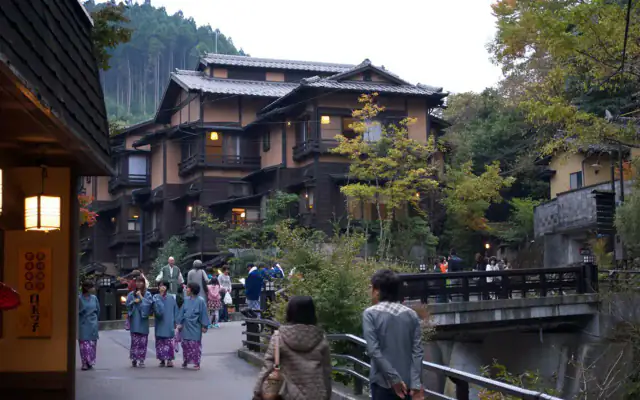
Kurokawa Onsen Yamamizuki (Riverside Forest Rotenburo)
The poster child of Kyushu's forest rotenburo culture—soak directly beside a rushing cedar-shaded river using Kurokawa's collectible round wooden pass.
Hand-Free Est: ¥1,500 Kurokawa 3-Bath Cedar Token (= ¥500/bath across 3 ryokan) + ~¥250 towel
Spring: 100% free-flowing private-source sodium-chloride sulfate spring