Iodine-Rich Geothermal Brine — Chemistry, Skin Feel, Rinsing Rules & Top Baths
QUICK CHEMISTRY SUMMARY
Added in the Ministry of the Environment's 2014 revision as Japan's 10th therapeutic classification, Iodine springs ('Gan-youso-sen') contain ≥ 10 mg/kg of iodide ions. Sourced from prehistoric seaweed-rich marine strata deep beneath non-volcanic plains like Tokyo and Chiba, these amber-gold brines deliver intense warmth and skin conditioning.
- Water Appearance
- Rich amber-tea hue
- Post-Soak Rinse Verdict
- Do NOT rinse (leave mineral veil)
- Official MOE Definition Threshold
- Iodide ions (I⁻) ≥ 10 mg/kg (added as official 10th category in 2014)
IMPORTANT BATHING PRECAUTION
How Iodine-Rich Geothermal Brine Works on Skin & Circulation
The Kanto plain around Tokyo Bay sits atop one of Earth's richest prehistoric marine iodine basins—meaning urban bathers can soak in rare golden iodine-chloride brines without leaving Tokyo.
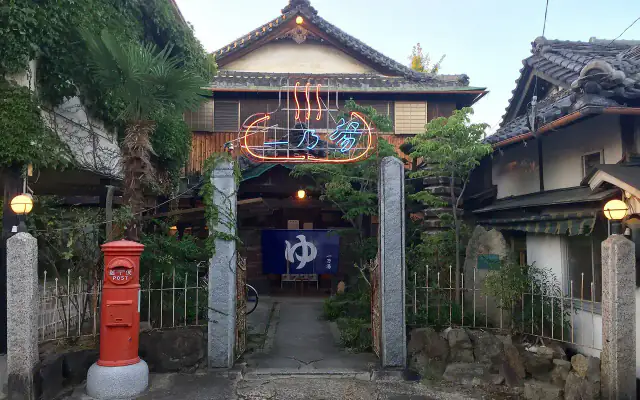
At Musashi-Koyama Onsen Shimizuyu in Shinagawa, bathers can alternate between humic black Kuroyu and deep-well golden iodine spring water for ¥550.
Traditional Balneotherapy Uses: Skin conditioning, deep fossil-brine warmth
Step-by-Step Soaking & Post-Bath Rinse Protocol
- Because most iodine springs are also concentrated salt brines, soak in 5–8 minute intervals and drink plenty of water
- Notice the warm, oceanic amber scent and golden tint; keep white fabrics clear of splashes
- Do a light splash rinse if concentrated brine feels heavy on humid summer days
Want to compare all 10 official classifications side by side? Explore our interactive 10 Mineral Spring Chemistries Atlas.
Verified Bathhouses Featuring Iodine-Rich Geothermal Brine (1 Venues)
| Facility | Location | Hand-Free Total | Tattoo Policy |
|---|---|---|---|
| Musashi-Koyama Onsen Shimizuyu (Kuroyu Sento) | Shinagawa-ku, Tokyo | ¥550 Tokyo public sento rate (~¥850 total with rented towel & soap; sauna extra) | Tattoo-Friendly |
Musashi-Koyama Onsen Shimizuyu (Kuroyu Sento)
A legendary Shinagawa neighborhood bathhouse where ¥550 unlocks two authentic outdoor geothermal springs—jet-black humic Kuroyu and amber iodine brine—with full tattoo access.
Hand-Free Est: ¥550 Tokyo public sento rate (~¥850 total with rented towel & soap; sauna extra)
Spring: Dual natural springs: deep humic 'Kuroyu' black water + amber iodine-rich 'Golden Spring'