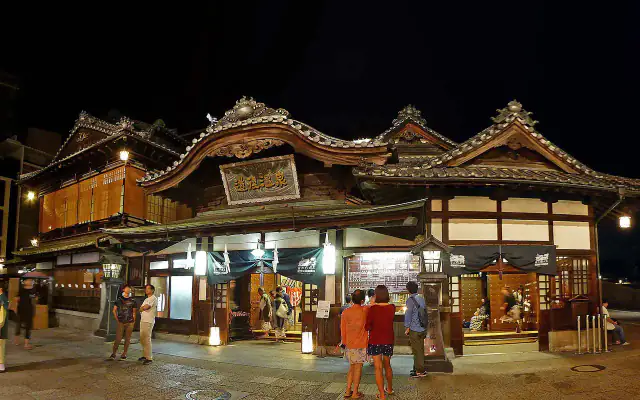
Dogo Onsen Honkan (1894 Cultural Property Bathhouse) — Fees, Hand-Free Total, Tattoo Policy & Transit
Steeped in 3,000 years of history and freshly restored in 2024, Dogo Onsen Honkan lets anyone soak inside an 1894 architectural treasure with 100% tattoo-friendly access.
QUICK VISIT SUMMARY
Hand-Free Total: ~¥850 downstairs soak w/ towel, or ¥1,300–¥2,500 heritage tatami lounge + tea & sweets course
Hours: 06:00–23:00 daily (last entry 21:30–22:30 by course; 1 annual deep-clean day in December)
Station / Transit: 5 min walk through Haikara-dori Arcade from Dogo Onsen Tram Station
Tattoo Policy: 100% Tattoo-Friendly municipal heritage bathhouse (Honkan, Asuka-no-Yu, and Tsubaki-no-Yu all welcome tattoos!)
EDITORIAL INSIDER TIP
Verified Facility Specifications
| Facility Name | Dogo Onsen Honkan (1894 Cultural Property Bathhouse) (道後温泉本館(どうごおんせんほんかん)) |
|---|---|
| Address | 〒790-0842 愛媛県松山市道後湯之町5-6 |
| Base Entry Fee | Weekday ¥700 / Weekend ¥700 Fully reopened across all floors in July 2024 after a 5.5-year conservation project; Japan's first public bathhouse designated an Important Cultural Property (1894). |
| Towels & Robes | ¥700 'Kami-no-Yu Downstairs' soak (shampoo included; towels rented/sold); upstairs tatami tea & robe courses ¥1,300–¥2,500 |
| Spring Chemistry | 100% unheated, undiluted alkaline simple spring blended across 18 sources to a natural 42°C |
| Key Amenities | Fully Restored 1894 Masterpiece Unheated, Undiluted 42°C Spring 100% Tattoo-Friendly 6 AM Drum Opening Ritual |
| Last Verified | 2026-11-24(Oyumeguri Japan Editorial Desk) |
Step-by-Step Entry, Lockers & True Yen Budget at Dogo Onsen Honkan (1894 Cultural Property Bathhouse)
Dogo Onsen Honkan (1894 Cultural Property Bathhouse) operates as a traditional Japanese public sotoyu bathhouse rather than a sprawling resort spa. Expect a streamlined ticket vending machine, wooden shoe lockers (often requiring a refundable ¥100 coin), or town pass scanning (such as Kinosaki Yumepa or Kurokawa Yu-Tegata) right at the entrance curtain (noren). Undress completely in the gender-separated changing room and carry only your small modesty towel into the bath hall.
Towel & robe policy: "¥700 'Kami-no-Yu Downstairs' soak (shampoo included; towels rented/sold); upstairs tatami tea & robe courses ¥1,300–¥2,500." Because linens are bundled into admission, you can drop in completely empty-handed straight from a Shinkansen or city walk without carrying damp towels afterward.
- Hand-Free Total Estimate: ~¥850 downstairs soak w/ towel, or ¥1,300–¥2,500 heritage tatami lounge + tea & sweets course
- Towel & Robe Policy: ¥700 'Kami-no-Yu Downstairs' soak (shampoo included; towels rented/sold); upstairs tatami tea & robe courses ¥1,300–¥2,500
- Last Verified: 2026-11-24 against official venue disclosures
Mineral Spring Chemistry (Simple Thermal & Alkaline Spring) & Soaking Etiquette
Post-Soak Rinse Verdict: Do NOT rinse (leave mineral veil) (pH 7.5–9.5+)
Dogo Onsen Honkan (1894 Cultural Property Bathhouse) features "100% unheated, undiluted alkaline simple spring blended across 18 sources to a natural 42°C." Under Japan's Ministry of the Environment classification, this aligns with the Simple Thermal & Alkaline Spring (pH 7.5–9.5+) family: Low irritation with a smooth soap-like glide on high-pH alkaline waters; ideal for first-timers and children.
Before stepping into any hot tub, ladle 8–10 scoops of warm kake-yu water over your feet, knees, hips, and shoulders to acclimate blood pressure, then wash thoroughly while seated at a low shower station. Practice "bunkatsu-yoku" (split soaking: two or three 5–8 minute immersions separated by cool air breaks) rather than a single marathon soak, and drink 300–500 ml of water immediately afterward. Post-soak rule: Do NOT rinse (leave mineral veil).
Best Arrival Times, Crowd Avoidance & Transit Tips
At Dogo Onsen Honkan (1894 Cultural Property Bathhouse) (06:00–23:00 daily (last entry 21:30–22:30 by course; 1 annual deep-clean day in December)), day-trip crowds peak on weekends and national holidays between 14:00 and 17:30. Visit within the first 90 minutes after opening for the freshest, quietest water, or after 18:30 once tour buses depart (watching final admission cutoffs).
Transit access: 5 min walk through Haikara-dori Arcade from Dogo Onsen Tram Station. At roughly a 5-minute walk from the nearest station/stop, you retain post-bath core warmth even on chilly evenings.
Ehime Bathhouse Ordinances & Tattoo Alternatives
Following Japan's revised national MHLW guidelines, most prefectures cap child mixed-gender bathhouse entry at age 6 (meaning children aged 7+ use the bath matching their gender).
Tattoo policy: "100% Tattoo-Friendly municipal heritage bathhouse (Honkan, Asuka-no-Yu, and Tsubaki-no-Yu all welcome tattoos!)." This makes Dogo Onsen Honkan (1894 Cultural Property Bathhouse) an outstanding, stress-free choice for inked international travelers.